
Air cargo forklifts near BWI Marshall should be chosen for speed and uptime, not top capacity. Freight stays for hours, not weeks, and every shipment has its own cutoff. A truck that is down at four in the afternoon costs you a departure, not just an hour of work.
The Baltimore area has two freight gateways close together: the cargo area at BWI Marshall and the Port of Baltimore. Many forwarders and 3PL warehouses between them handle both air and ocean freight. This guide covers the forklift side of that work.
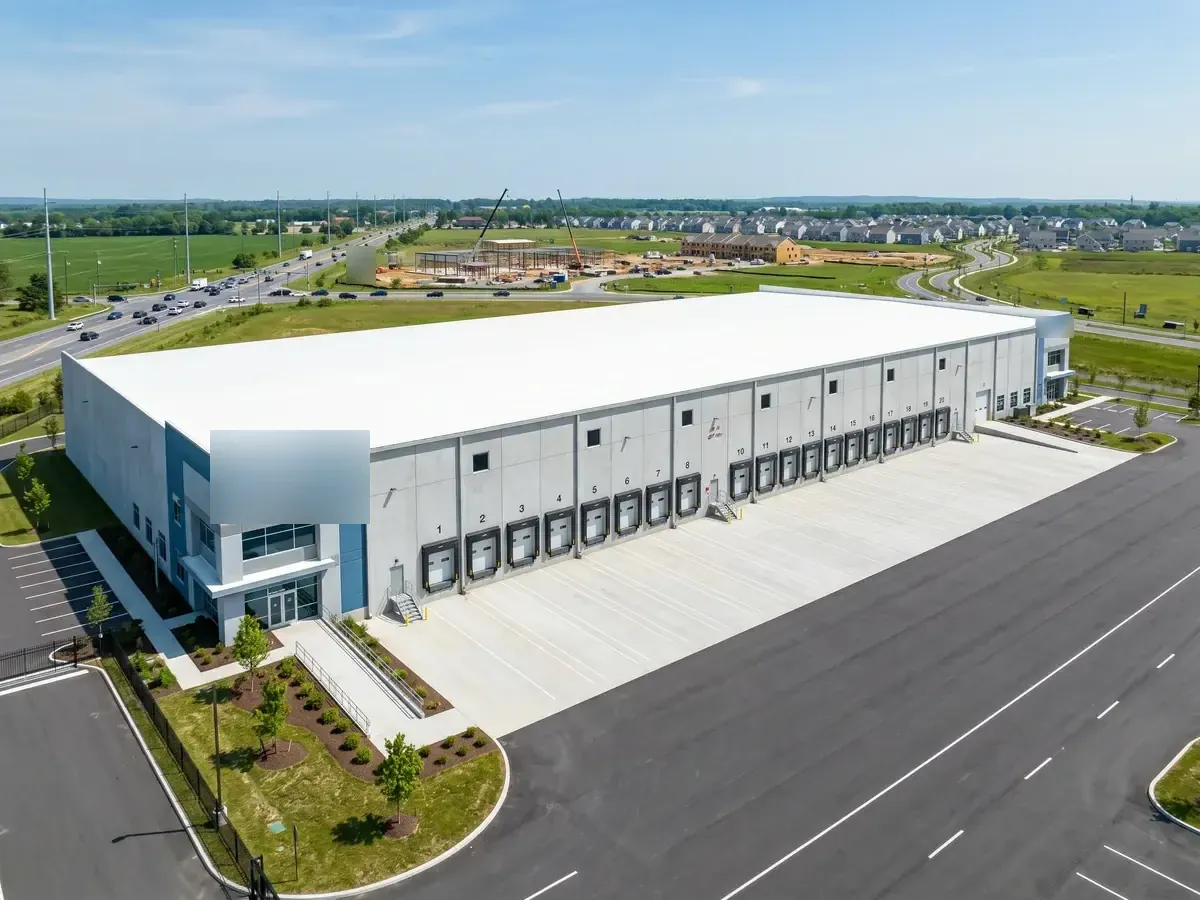
On the air side, much of the work sits within a few miles of the airfield. Distribution and airport freight buildings line Dorsey Road (MD-176) through Hanover, and the Stoney Run district sits right beside BWI. North of the airport, the flex buildings along West Nursery Road in Linthicum hold airport support and light distribution tenants. To the west, warehouses and yards on the US-1 corridor in Elkridge sit between I-95 and I-195, a short run from the cargo area. Much of this is flex space with a few dock doors, not giant distribution centers, and that shapes the truck choices below.
Why Do Speed and Availability Beat Capacity?
In air cargo, speed and availability beat capacity because the limit is cutoff time, not weight. A forwarder needs enough moves before each cutoff, and a truck that is working when those moves have to happen.
A distribution warehouse picks a truck to move the most weight per hour at the lowest cost. Forwarding is different. The limit is almost never weight. It is the number of moves before a cutoff.
That leads to a slightly different spec:
- Spare capacity, not a truck at its limit
- Good visibility
- Responsive controls
- Maintenance that prevents failures, not just fast repairs after them
A truck running at its rated limit on awkward pieces is slow and hard on itself. Here, slow is the expensive failure.
Indoor-Outdoor Is the Normal Case
Most air cargo forklifts work both indoors and outdoors, so LP internal combustion (IC) is usually the better fit. Forwarder work moves between a dock face, an indoor staging area and a yard, often in a single move.
LP trucks suit that pattern well. Refueling takes minutes. Weather does not affect the truck. Pneumatic or solid-pneumatic tires handle the change between surfaces.
Maryland winters add one more point. Road salt tracked onto docks and yards is hard on any truck that works outside. Wash-downs and closer checks of brakes, wiring and the undercarriage are worth building into the service plan.
Where an operation is fully enclosed, such as a bonded room or a sorting hall, electric is still the better choice. Plenty of buildings run both.
Irregular Freight Is the Defining Problem
Irregular freight is the main challenge in air cargo, so attachments matter more than in a warehouse. Air freight does not arrive in tidy pallet-sized units.
Unit load devices, crated machinery, aerospace parts and long items are all normal. So are awkward shapes and pieces that will not sit square on forks. Ocean freight unloaded from containers brings its own mix of floor-loaded cartons and odd crates.
These attachments matter most here:
- Fork positioners — load widths vary constantly, and nobody adjusts forks by hand in practice
- Side-shifters — fine alignment without moving the truck, which helps in a crowded staging area
- Booms or jibs — for hanging loads that cannot sit on forks
- Longer forks or extensions — used carefully, with the derating understood
Attachments lower a truck's rated capacity. This is called derating. It matters more here than in a warehouse because the loads are already awkward. Spec the truck with the attachment fitted, not without it.
What Aisle Width and Staging Layout Work for Air Cargo?
Air cargo buildings need wide aisles and generous working room, not narrow aisles. Narrow aisles save space in a warehouse. In a forwarder building they are usually a mistake.
Trucks move constantly, often under time pressure. Several trucks often work the same space. Tight aisles lead to more collisions, and that means damaged freight and damaged trucks.
Generous working room is worth more than the floor space it takes. The layout should follow the outbound sort, not maximize storage. Plan the rack layout and the trucks together, so the trucks have room to work fast and safely.
Rental for Seasonal Peaks
Renting extra forklifts for the peak season is cheaper than owning them all year. Air freight volume is seasonal, and it is one of the clearest rental cases there is.
Owning your peak-season truck count year-round means paying for and maintaining trucks that sit idle most of the year.
Renting the difference for the peak is simply cheaper. The trucks are delivered, serviced for the term and picked up afterwards. It also puts a relationship in place for the other rental case. That is covering a fleet truck that breaks down when you can least afford downtime.
Operator Certification in This Environment
Forklift operator certification for air cargo must match the real site and each truck type. Three points stand out.
Training must reflect workplace conditions. OSHA 1910.178 requires the hands-on evaluation to cover the actual site. A busy cargo dock is very different from a quiet warehouse aisle. It has multiple trucks, people on foot, tight staging and time pressure. Training done somewhere else on unfamiliar trucks does not cover it well.
Certification is specific to truck type. Operations here often run counterbalance trucks and powered pallet jacks. They also run pneumatic-tire trucks for yard work. Each is a separate class that needs its own training and evaluation.
Know who inspects your site. In Maryland, MOSH enforces OSHA's forklift standard (29 CFR 1910.178) at warehouses and forwarder buildings. Work on a port marine terminal is different. Federal OSHA covers it under the marine terminal rules in 29 CFR Part 1917. Our certification guide explains the split.
Service Posture
Planned maintenance matters most in time-critical air cargo work, because unplanned downtime costs the most there. Set service intervals by actual hours, since cargo operations add hours quickly.
The daily pre-shift check has to really happen. It should not be signed off in batches.
Some operations cannot afford a truck being out of service. For them, the practical answer is a service plan that includes a replacement unit, not one that promises a fast repair.
What We Need to Spec It
To spec an air cargo forklift, we need these details about your freight and building:
- The heaviest and the most awkward piece, with dimensions
- Whether the truck works indoors, outdoors or both, and roughly what split
- Peak cutoff pattern — when the pressure really falls
- Staging layout and the tightest point the truck must get through
- Whether any part of the operation is bonded or access-controlled